
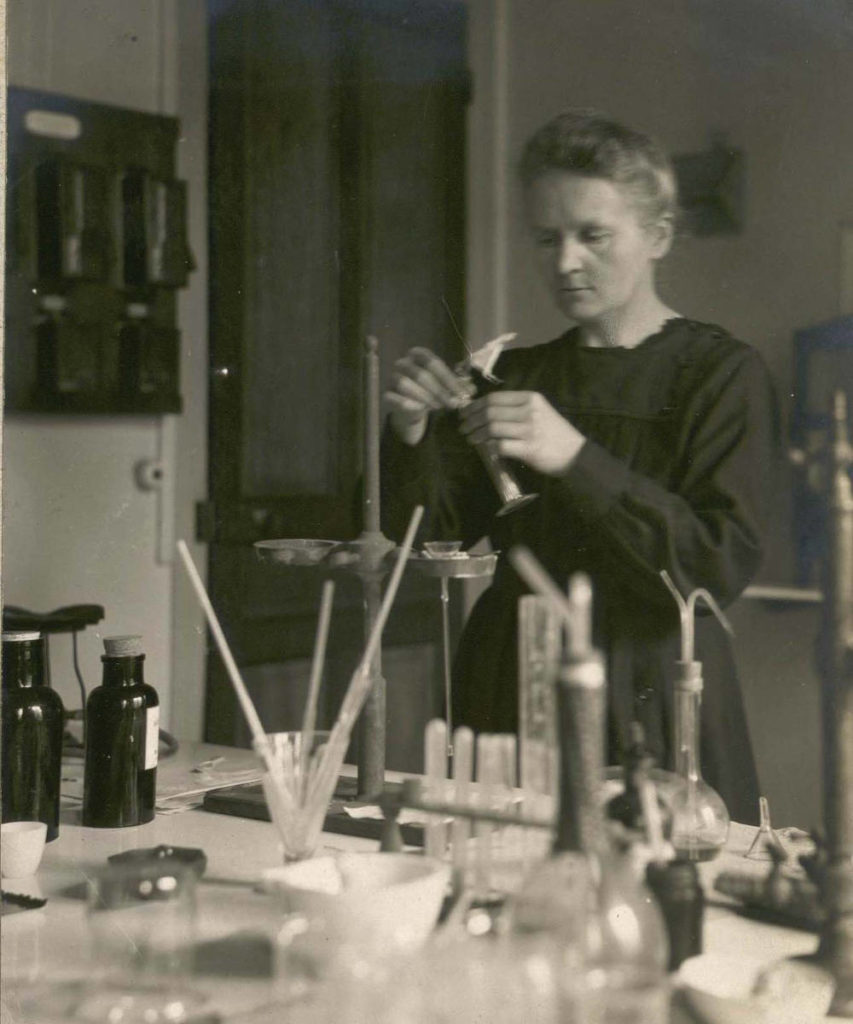
Marie Curie: The Woman Who Changed the Course of Science Forever
When we talk about scientists who did not just study science but reshaped it, one name stands apart across centuries, disciplines, and borders — Marie Curie.
She was not only a brilliant physicist and chemist but also a symbol of perseverance, curiosity, and fearless dedication to knowledge.
Marie Curie’s life reads like a powerful story where science, sacrifice, and passion meet. From a modest childhood in Poland to becoming the only person in history to win Nobel Prizes in two different scientific fields, her journey continues to inspire students, researchers, and educators worldwide.
Early Life: Curiosity Born in Adversity
Marie Curie was born as Maria Skłodowska on 7 November 1867 in Warsaw, Poland, then under Russian rule. Her early life was marked by hardship:
- Her mother died of tuberculosis when Marie was just 10
- Her family struggled financially
- Women were barred from higher education in Poland
Yet, these obstacles did not suppress her curiosity. Instead, they sharpened it.
Marie became part of the “Flying University”, a secret educational movement that taught Polish students forbidden subjects, including advanced science. This underground learning laid the foundation for her scientific mindset — questioning authority, relying on evidence, and believing deeply in education.
Journey to Paris: Science Above All
At the age of 24, Marie moved to Paris to study at the University of Paris (Sorbonne). She lived in extreme poverty, often studying while hungry and cold, but her academic brilliance was undeniable.
She earned:
- A degree in Physics (1893)
- A degree in Mathematics (1894)
It was during this time that she met Pierre Curie, a physicist who would become both her husband and scientific partner. Their collaboration would soon change the world.

Discovery That Shook Science: Radioactivity
Marie Curie began studying mysterious rays emitted by uranium, building upon Henri Becquerel’s earlier work. She coined a revolutionary term for this phenomenon:
Radioactivity
Her research led to the discovery of two entirely new elements:
- Polonium (named after her homeland, Poland)
- Radium
These discoveries proved that atoms were not indivisible, overturning long-standing scientific beliefs and opening new frontiers in atomic science.
What makes this achievement even more remarkable is that Marie Curie worked under extremely harsh laboratory conditions, processing tons of pitchblende manually, often without safety equipment — unaware of radiation’s dangers.
Nobel Prizes: A Historic First
Marie Curie achieved what no one before — or since — has matched:
🏆 Nobel Prize in Physics (1903)
Shared with Pierre Curie and Henri Becquerel for research on radiation phenomena.
🏆 Nobel Prize in Chemistry (1911)
Awarded solely to Marie Curie for discovering radium and polonium, and isolating radioactive elements.
She became:
- The first woman Nobel laureate
- The first person to win two Nobel Prizes
- The only person to win Nobel Prizes in two different sciences
Personal Loss and Unbreakable Resolve
In 1906, tragedy struck when Pierre Curie died in a road accident. Marie was devastated — emotionally and professionally. Yet, she chose resilience over retreat.
She became the first female professor at the Sorbonne, taking over Pierre’s position and continuing their scientific work with renewed determination.
Her lectures attracted students from across Europe, many of whom later became leading scientists themselves.

Marie Curie and Medical Science: Saving Lives
During World War I, Marie Curie applied her scientific knowledge to medicine. She developed mobile X-ray units, known as “Little Curies”, which helped doctors locate bullets and fractures on battlefields.
She personally trained nurses and operated machines, often near the front lines. It is estimated that over one million soldiers benefited from her efforts.
This contribution alone would have secured her place in history — even without her Nobel Prizes.
The Hidden Cost of Genius
At the time, the dangers of radiation were unknown. Marie Curie handled radioactive materials daily, often carrying radium in her pockets.
She eventually developed aplastic anemia due to prolonged radiation exposure and passed away on 4 July 1934.
Even today, her notebooks remain radioactive and must be handled with protective equipment — a silent testimony to the risks she endured for science.
A Legacy That Lives On
Marie Curie’s impact goes far beyond her lifetime:
- She founded the Curie Institutes in Paris and Warsaw
- Her research laid the foundation for nuclear physics, cancer therapy, and medical imaging
- Her family continued her legacy — her daughter Irène Joliot-Curie also won a Nobel Prize
She proved that science knows no gender, and brilliance needs no privilege — only perseverance and passion.
Why Marie Curie Still Inspires Millions
Marie Curie represents:
- Scientific integrity
- Fearless curiosity
- Dedication to humanity
- Equality in education and research
For students, she is proof that background does not limit destiny.
For scientists, she is a reminder that true discovery requires sacrifice.
For society, she is an example of how knowledge can serve humanity.
Madame Curie Biography
Still curious to learn more about this inspiring most famous women scientist, read madame Curie biography from the below book.

Final Thoughts
Marie Curie was not just a scientist — she was a force of nature. Her life reminds us that the pursuit of knowledge is one of the noblest human endeavors, capable of changing not just textbooks, but lives.
At ChemistryNotesInfo.com, her story serves as a guiding light for every learner who dares to ask why, explore the unknown, and believe that science can truly make the world better.
If this article inspired you, explore more scientist biographies, chemistry concepts, and educational resources on www.ChemistryNotesInfo.com — where science meets curiosity.
%20(1).png "Interesting Facts About All Elements of Periodic Table - Fun Facts, Fascinating History, and Essential Properties of Every Element")


1. Interesting Facts About All Elements of Periodic Table
2. Science Adventures with Jag, Dils and Dad